The Tale of Three Ashas
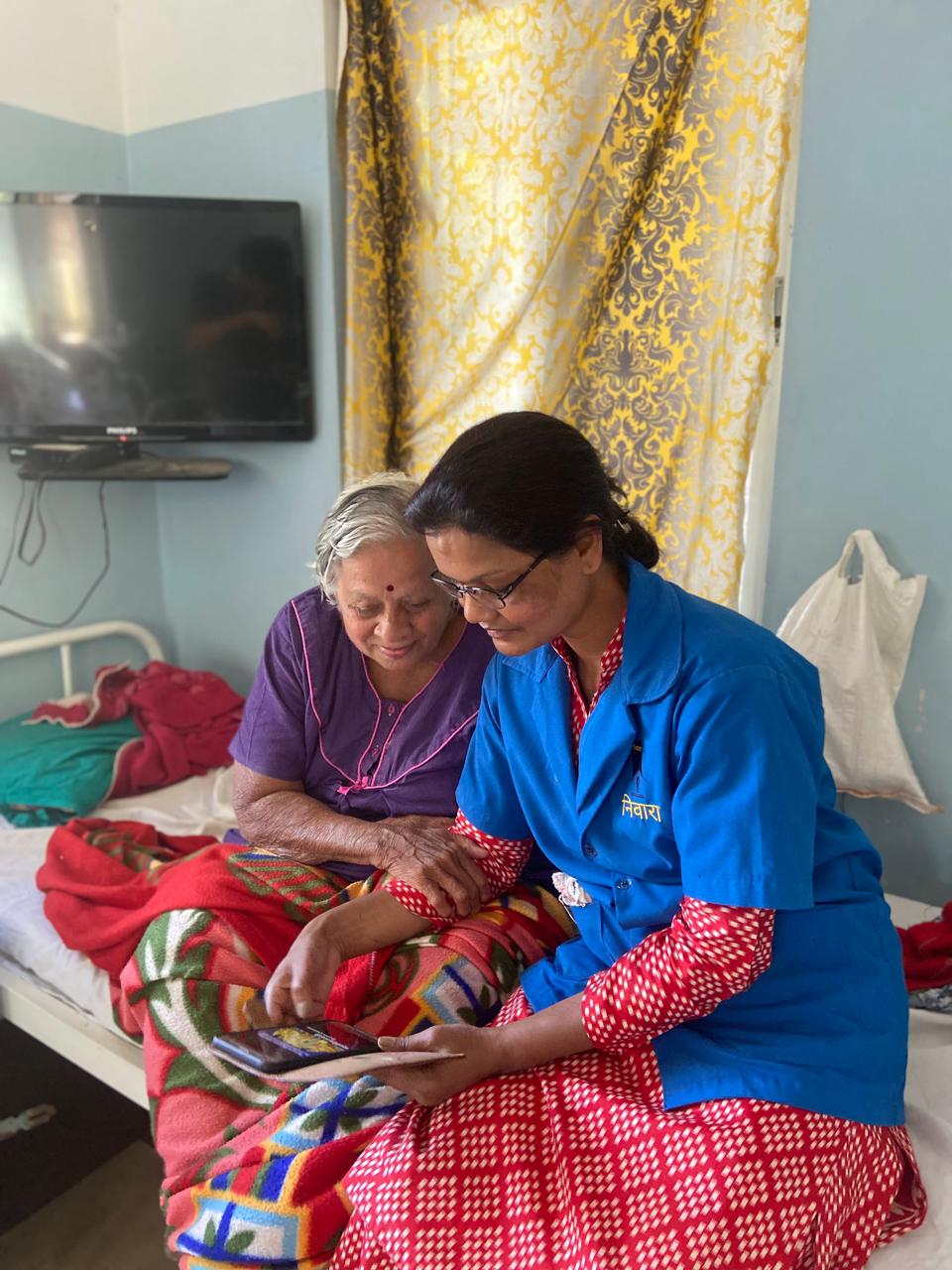
In Marathi, the name "Asha" means hope. At GC, Pune, there are three women who share this name—Asha M, Asha S, and Asha O. Each one has a unique story, filled with challenges, resilience, and a strength that defines them.
Asha M: A Journey of Struggles and Solitude
Asha M, 83 years old, was admitted to GC in October 2022 after hip surgery for a fracture. Over the course of two years, she was admitted to the hospital three times for hip-related complications. When she first arrived at GC Niwara, she had a wound on her left calf that had been untreated for months. Through regular dressings, the wound healed, but one of her major challenges was her unwillingness to bathe. It took a lot of patience, but I was finally able to convince her to embrace this change. She began bathing with the help of the Mavashis, marking a significant shift in her routine.
Asha M was later moved to another ward, but she remained somewhat isolated and adamant about her habits. Her protein levels were low, she was anaemic, and she had pus discharge from her surgery site. Despite heavy antibiotic treatment, the discharge persisted. After several cycles of antibiotics, her condition showed slight improvement, but the problem would recur.
Asha M was aloof and often seemed disconnected, not interested in gossip or socializing. Her long-term illness had likely caused her to retreat into herself. In December 2024, Asha M suffered an accidental fall under staff care. Her MRI and other investigations showed no major issues, but she experienced a deterioration in her central nervous system (CNS) and was hospitalized. Despite attempts at surgery to address her hip, complications led to sepsis, and Asha M sadly passed away.
Asha S: A Tale of Resilience in the Face of Adversity
Asha S arrived at GC after surviving her second episode of ischemic heart disease (IHD), which required thrombolysis with IV anticoagulants. During this hospitalization, she also suffered a stroke, which left her with right-sided weakness, slurred speech, and the need for a Ryle’s tube for feeding. When she first arrived, she was depressed, crying, and emotionally withdrawn. However, with time, she improved. We were able to remove the Ryle’s and transition her to oral feeding, although she remained reluctant to eat.
Asha S often hid behind a façade of despair, cursing her fate for the condition she found herself in. Initially placed in a ward with Indu, who was also emotionally demanding, Asha S shared similar mood swings. Recognizing the need for a better environment, we moved Asha S to a ward with more stable and lively patients, where she could watch TV and engage with others.
She made initial progress with physiotherapy, but soon complications arose, including loose motions and PV bleeding. We transferred her to Sushrut, where colonoscopy and blood transfusions were recommended. Due to financial constraints, her family moved her to Nvale, where her PV bleeding stopped, and she returned to us
Asha S struggled with recurring urinary tract infections (UTIs), which required various treatments with antibiotics. Despite these setbacks, she would recover and start physiotherapy, but each time, her progress seemed to reset, forcing her to begin from square one. In December, Ujwala J, a lively and energetic patient, arrived for post-surgical care after an ankle injury. Ujwala and Asha S quickly became friends, sharing stories, singing songs together, and lifting each other’s spirits. This companionship played a crucial role in Asha S’s recovery, and she made remarkable progress with walking support on the ramp.
Unfortunately, shortly after Ujwala J’s discharge, Asha S had another UTI episode. Despite managing it with intramuscular antibiotics, she began to complain of abdominal pain and urinary retention, making it impossible to remove the catheter. Once again, her progress was halted, and her mood worsened. With a decreased appetite and frequent health complaints, physiotherapy had to start from the beginning. The challenge now is to find a way to motivate her to keep going.
Asha O: Resilience and Determination Despite Limitations
Asha O, the eldest of the three Ashas, had undergone left hip surgery and was admitted for post-operative care. Despite her recovery, her mobility was severely hampered by osteoarthritis in both knees. Though she gave her best effort, she could barely walk a few steps, even with the aid of a walker. She tried physiotherapy at another center daily, but there was no noticeable improvement.
Yet Asha O is remarkably resilient. While physical pain and limitations may have affected her mobility, they did not touch her mental well-being. She is talkative, traditional in her thoughts, and has an authoritative nature, often initiating conversations with fellow patients about their marital status, children, and other personal matters. She has strong moral opinions and doesn’t hesitate to offer advice on what should or shouldn’t be done according to her viewpoint.
Asha O is full of life, participating in everything, whether it’s asking for a poem or singing a song at any given occasion. She doesn’t shy away from sharing personal details, like the fact that her sons are still unmarried and she is actively looking for brides for them. Despite her limitations, she holds a certain zeal for life that has likely kept her comparatively healthy. She loves to engage in lively discussions, often sparking debates about who will empty the urine bags or where people should sit during meals. This energy and will to stay active in her community are a testament to her strength.
Having been a primary school teacher, Asha O can even teach wheelchair-bound exercises to others, contributing to the well-being of those around her. Her resilience and determination continue to shine, proving that even in the face of limitations, one can continue to live life with purpose and joy.
Unfortunately, shortly after Ujwala J’s discharge, Asha S had another UTI episode. Despite managing it with intramuscular antibiotics, she began to complain of abdominal pain and urinary retention, making it impossible to remove the catheter. Once again, her progress was halted, and her mood worsened. With a decreased appetite and frequent health complaints, physiotherapy had to start from the beginning. The challenge now is to find a way to motivate her to keep going.
The three Ashas, with their distinct personalities, prove that no matter the challenge, the spirit of hope should remain ever strong.

Related posts
Lorem ipsum dolor sit amet, consectetur adipiscing elit.